Coin Sort
- 4.4
- Rating
- 5.00M
- Installs
- Free
- Price
 Analysis by App-foxy
I found Coin Sort most enjoyable when I wanted a quiet puzzle that could fill a few spare minutes without demanding a long tutorial or a serious commitment. It is a casual game from Lion Studios Plus built around arranging and matching colored coins, and its appeal comes from the simple satisfaction of turning a messy board into an orderly one. My overall view is positive, but with an important qualification: this is best treated as a light, repeatable time-killer rather than a deep puzzle system.
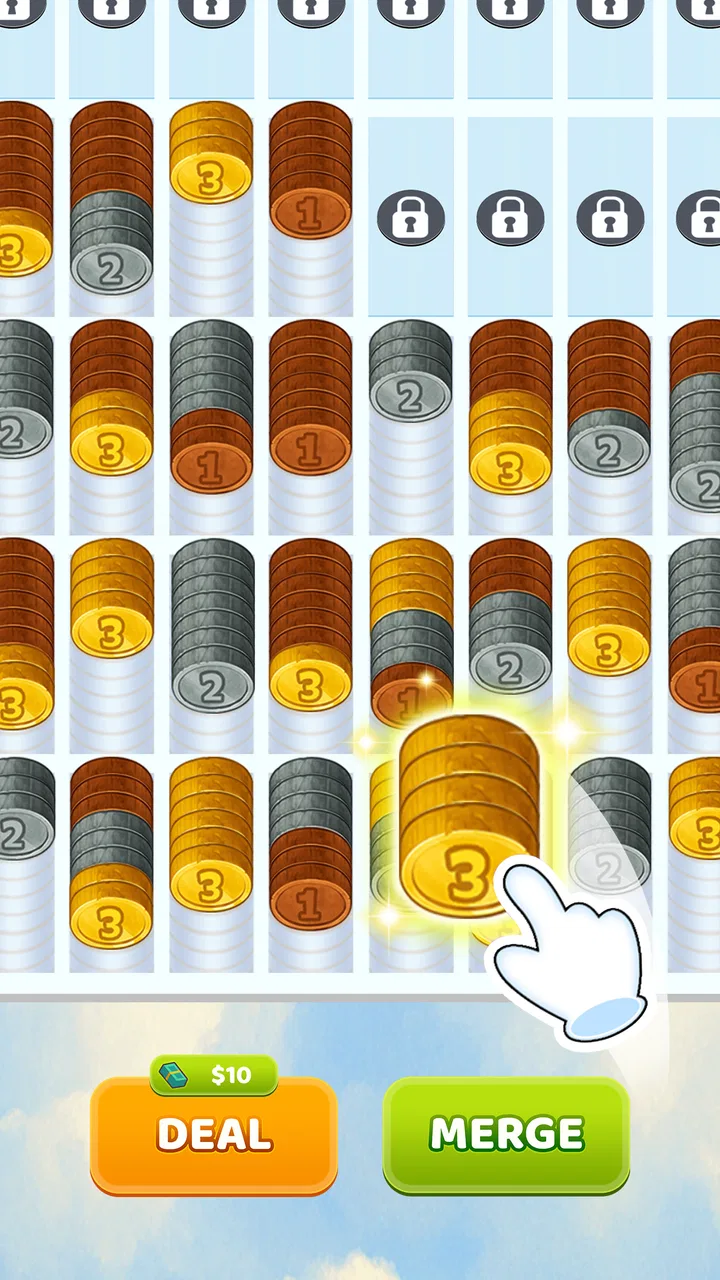
The basic idea is easy to understand. Coins are presented in different colors, and I sort them into matching groups until the board is cleared or the current challenge is completed. That simplicity is exactly why the game is approachable. I could start playing almost immediately, make progress with one hand, and stop without feeling that I had abandoned a complicated story or a long competitive match.
That straightforward design also explains why it has attracted a sizeable audience. Coin Sort is free to download, carries an Everyone age rating, and has passed one million installs. Its average rating is 4.4 from around 69 thousand ratings, with roughly 2.6 thousand written reviews. Those figures do not make it automatically suitable for everyone, but they do reflect the game’s strongest quality: it communicates its central activity quickly and gives casual players a reason to return.
You May Also Like

 Google Keep - Notes and lists
Google Keep’s Quiet Growth Shows the Appeal of Simpler Notes
As mobile work gets busier, Google Keep keeps winning a simple contest: capture a thought quickly, find it later, and get on with the day.

 Blood Strike: 2.5 Anniversary
Blood Strike’s Loadouts Turn Every Drop Into a Tactical Gamble
A close look at Blood Strike’s custom loadouts: how fast access to signature weapons reshapes its battle royale rhythm, rewards preparation, and narrows the gap between fights.

 Pandora - Music & Podcasts
Pandora’s Music Is Easy to Start, but Harder to Recover
Pandora’s strength is its low-effort path from a seed to a station. Its weak spot is how much confidence it asks you to place in connection, setup, and quiet recovery.

 8 Ball Pool
 Is Built on Rivalries, Rematches, and Routine
A close look at the rivalries, rematches, shared routines, and unanswered safety questions that turn a quick pool match into a persistent mobile community.

 Samsung Music
’s Quiet Strength Is Playing What You Already Own
Its reach comes less from spectacle than from dependable access to a personal library. That simplicity is both the app’s strongest retention engine and its ceiling.

 AccuWeather: Weather Radar
AccuWeather Review: A Quick, Clear Forecast for Everyday Decisions
For everyday plans, the best forecast is the one you can understand quickly. AccuWeather makes rain timing, radar, and local conditions easy to act on, with a few trade-offs.
More From Our News Desk



Why the sorting loop works so well
The most effective part of Coin Sort is the way it turns a familiar organizing task into a small puzzle. Matching colors is immediately readable, so I spend my attention on decisions rather than on learning rules. When several coins compete for limited space, the order in which I move them matters. A move that looks helpful at first can leave an awkward color trapped underneath another stack, while a patient move can open the board and create a chain of useful placements.
I especially like the visual rhythm of the game. A crowded arrangement creates a small amount of tension, then each successful match reduces the clutter. The reward is not only progress; it is the visible transformation from disorder to a clean layout. That makes the game satisfying even when the individual puzzle is not particularly difficult.
For a quick session, the lack of complicated controls is a real advantage. I do not need to remember a large collection of gestures or manage several systems at once. The central action remains consistent, which makes Coin Sort suitable for waiting rooms, short breaks, or the few minutes before going to sleep. I would not choose it for a long journey if I wanted a rich narrative or constant novelty, but it works very well as a compact mental reset.
There is also a useful distinction between speed and care. At the beginning of a board, I can often move quickly because the available matches are obvious. Later, I need to pause and inspect what each move will expose. That change gives the simplest puzzles a little more texture than a basic color-matching exercise. The game rewards players who look one or two moves ahead instead of tapping the first available option.
Small decisions matter more than fast tapping
My most useful habit was to avoid completing a visible match immediately when doing so would block a more important color. In a crowded arrangement, an apparently safe move can consume the only open space needed to separate another stack. I began checking which coins would become accessible after every placement, not just whether the current move created a match.
Another practical approach is to identify the most restricted color first. If one color is buried beneath several others or has fewer useful spaces around it, I treat it as the board’s priority. Clearing that obstruction early usually gives me more room to work. This is a small change in thinking, but it makes the game feel more deliberate and helps prevent careless restarts or wasted moves.
I also found that playing more slowly is not always better. Overthinking every simple placement can make a short casual session feel like work. My preferred rhythm is to move quickly through obvious matches, then pause only when a stack is about to become difficult to access. That balance preserves the relaxing quality while still giving the puzzle enough decision-making to stay interesting.
These habits are particularly useful on a phone because the screen is compact and the board can become visually busy. Instead of scanning every coin repeatedly, I focus on the stacks that control access to the rest. That reduces mental clutter and makes the game easier to follow when I am playing in a noisy environment or while taking a short break.
A good fit for interrupted play
Coin Sort suits an everyday situation I encounter often: I have a few minutes before an appointment, while waiting for food, or during a pause between tasks. I can open it, solve part of a challenge, and put the phone away without needing to remember a complicated sequence of events. The sorting format also makes it easy to resume because the visual state of the board tells me what needs attention.
That convenience is more important than it may sound. Some casual games rely on constant rewards, lengthy rounds, or a large number of menus. Coin Sort keeps the main activity close to the surface. If I only have a short window, I can spend most of that time actually sorting rather than navigating.
It is also approachable for players who are not normally interested in games. Someone who enjoys organizing objects, matching colors, or solving simple visual problems can understand the attraction without learning a specialized vocabulary. The Everyone rating reinforces that broad accessibility, although younger players should still use the usual family judgment around in-app purchases and screen time.
Where the experience begins to feel limited
The same simplicity that makes Coin Sort welcoming can eventually become its main weakness. Once I understood the most reliable sorting patterns, some boards began to feel familiar rather than surprising. The activity remains pleasant, but players looking for a constantly expanding challenge may find that color arrangement alone does not provide enough variety for extended sessions.
This is not a criticism of the core idea so much as a matter of expectations. Coin Sort is not the kind of puzzle I would recommend to someone who wants elaborate logic, story-driven progression, or a strong sense of mastery over many different rule sets. A dedicated puzzle game with varied mechanics would offer more depth. A traditional match-three game may also be a better choice for someone who prefers faster reactions, cascading effects, and more visual spectacle.
The free-to-play structure is another point I would consider before installing it. The game is free, but it includes in-app purchases ranging from $0.99 to $99.99 per item. I would approach those options carefully, particularly on a shared device. The presence of a very high upper purchase tier does not mean every player will spend money, but it is a reminder to review purchase controls before handing the phone to a child or allowing casual tapping around payment screens.
For me, the best way to enjoy the game is to treat optional spending as unnecessary rather than as part of the expected routine. If a player feels pressured to buy help or progress, the relaxed quality of the sorting loop can disappear. Anyone who wants a completely distraction-free puzzle experience may prefer a paid alternative or a game with a different monetization model.
There is also a version consideration. The current version is 2.6.4, and the minimum operating system is Android 7.0. That makes it accessible to many older Android devices, which is helpful if I want to use a spare phone rather than a new model. Still, compatibility alone does not guarantee identical performance on every handset. On an older device, I would keep expectations sensible and make sure there is enough free space for normal app operation.
How it compares with familiar casual alternatives
Compared with match-three games, Coin Sort feels calmer and more controlled. Match-three titles often ask me to react to a board that changes quickly, while this game gives me time to study the arrangement and plan a sequence. If I want bursts of action and dramatic combinations, I would choose the former. If I want a slower puzzle that rewards visual organization, Coin Sort is the better fit.
Compared with classic tile-matching games, the appeal is more about managing access and order than spotting identical symbols in a large field. The important question is not simply what can be matched now, but what a move will reveal next. That gives the game a modest planning element without making it intimidating.
Compared with sorting games that use many object types or more elaborate environments, Coin Sort is easier to read but may feel less varied. Its focus on coins and colors keeps the interface understandable, yet it also means that players who need frequent changes of theme or mechanic could lose interest sooner. I see this as a deliberate trade-off: lower friction in exchange for less complexity.
It is also different from competitive puzzle games. There is no need for me to compare my pace with another player in order to enjoy a session. That makes it a comfortable choice when I want to unwind, but it will not satisfy someone whose motivation comes mainly from rankings, direct competition, or high-pressure timed play.
Who should install it
I would recommend Coin Sort to casual players who enjoy color matching, orderly layouts, and short sessions. It is particularly suitable for people who want a game that can be understood immediately and played in small pieces throughout the day. It may also appeal to parents looking for an accessible puzzle category for a general-audience device, provided that purchase settings are handled responsibly.
It is a sensible option for someone with an older Android phone as well, since the minimum requirement is Android 7.0. The free entry point makes it easy to try without committing money first. I would install it when I wanted a low-pressure activity rather than a major entertainment destination.
I would skip it if my priority were deep strategic variety, a narrative campaign, competitive multiplayer, or a demanding test of advanced logic. Players who quickly become bored by repeating a familiar interaction may also prefer a puzzle collection with several mechanics. Coin Sort’s strength is focus, not breadth.
One group that should think carefully is anyone who dislikes free games with optional purchases. Even if the basic sorting experience is enough for me, the listed purchase range means the financial side deserves attention. I would disable or protect purchases on a child’s device and decide in advance whether the game is being used as a free pastime or as something worth spending on.
My verdict after playing
Coin Sort succeeds because it makes a small idea feel satisfying. Matching and arranging coins is easy to grasp, but the order of moves gives the board enough tension to reward patience. I like that I can play for a few minutes, stop cleanly, and return without a steep learning curve. The game’s casual presentation and Everyone rating make it broadly approachable, while its free price removes the barrier to trying it.
Its limitations are just as clear. The central loop may not offer enough variety for long-term puzzle enthusiasts, and the in-app purchase range makes device controls worth checking. I would not present it as a substitute for a deep logic game or an energetic match-three favorite. It occupies a narrower space: a neat, accessible sorting pastime for moments when I want gentle concentration.
For the right player, that narrow focus is a benefit rather than a problem. If you enjoy turning a cluttered arrangement into a clean one and want something that fits naturally into short breaks, I think Coin Sort is worth trying. Lion Studios Plus has kept the entry point simple, and my recommendation is strongest for players who value convenience and calm over complexity. Choose it for quick, satisfying organization puzzles, not for a large or constantly changing game world.
FAQs for Coin Sort
01What is Coin Sort and how does it work?
Coin Sort is a puzzle game that challenges players to sort different coins into the correct slots. The game presents various levels where coins are mixed, and players must strategize to place them correctly within a limited number of moves. The game is designed to improve problem-solving skills while providing entertainment.
02Is Coin Sort free to play, or are there in-app purchases?
Coin Sort is free to download and play, but it does offer in-app purchases. These purchases can include additional coin packs, hints, or special features that enhance gameplay. While the game is fully enjoyable for free, these extras can help players progress more quickly or customize their experience.
03What devices are compatible with Coin Sort?
Coin Sort is compatible with both Android and iOS devices. It requires Android 5.0 or later, and for iOS, it requires version 10.0 or later. The game is optimized for smartphones and tablets, ensuring a seamless experience across different screen sizes and resolutions.
04Does Coin Sort require an internet connection to play?
Coin Sort can be played offline, making it an excellent choice for users who want to enjoy gaming on the go without worrying about data usage. However, an internet connection may be required for certain features, such as in-app purchases or updates.
05Are there any ads in Coin Sort, and how can they be managed?
Coin Sort includes ads, which help keep the game free for users. Ads typically appear between levels or as banners. Players can opt to remove ads through a one-time purchase, providing an uninterrupted gaming experience. This option is available in the game's settings menu.
Pros
- Intuitive interface for easy navigation.
- Engaging gameplay with increasing challenges.
- Offline play available without internet.
- Minimal ads for a smoother experience.
- Compatible with older devices.
Cons
- Limited levels after initial stages.
- In-app purchases can be pricey.
- No multiplayer mode available.
- Graphics could be more detailed.
- Sound effects can become repetitive.

Coin Sort
Gallery